Sugata Mitra recently won the TED Prize for 2013. His wish is to build a virtual school where children learn from each other.

Sunday, March 3, 2013
Sugata Mitra: School in the Cloud
Sugata Mitra recently won the TED Prize for 2013. His wish is to build a virtual school where children learn from each other.

Saturday, March 2, 2013
The Future of STEM Education
Hear Professor Roni Ellington’s inspirational talk from TEDxBaltimore, 2013.
Friday, March 1, 2013
Salt + Fat

The Extraordinary Science of Addictive Junk Food by Michael Moss, Published Feb. 20, 2013 in the New York Times Sunday Magazine.
I enjoyed this article in last weekend’s New York Times. In it, you will find important information about the workings of the food industry and will have a better understanding of the obesity epidemic. Also, I couldn’t help but notice how mathematics is such an important part of the story. When you get to the part about the food guru Howard Moskowitz, (“I’ve optimized soups, I’ve optimized pizzas. I’ve optimized salad dressings and pickles. In this field, I’m a game changer.”) notice his ability to use statistical analysis to take bucketfuls of taste test data and turn it into usable information. This is why he has become a legend in his field.
Learning to code
http://www.code.org/
Watch this video. I completely agree that learning to code is learning to think. I think it is getting easier to teach, too, because there are lots of resources like Scratch and the Lego Mindstorms, plus tons of other links on the code.org. We are running out of time and excuses when it comes to our kids.
Watch this video. I completely agree that learning to code is learning to think. I think it is getting easier to teach, too, because there are lots of resources like Scratch and the Lego Mindstorms, plus tons of other links on the code.org. We are running out of time and excuses when it comes to our kids.
Monday, February 25, 2013
Marjorie on Math Munch


The current Math Munch post includes a piece about a woman named Marjorie Rice who became interested in tesselations and discovered some new ones on her own. These pictures are from her website. What’s great about this story is that a) she’s a woman, b) she didn’t have a math background beyond high school, and c) she was curious, worked at something, and found enjoyment and success.
I won’t go on and on here, but the other two stories with Marjorie’s in this issue of Math Munch are equally worth reading.
The pictures I’ve included here are some of Marjorie’s tesselations.
Monday, January 28, 2013
How much time do you have?
Teachers: Do you ever find yourself with a little time on your hands and nothing planned? There are zillions of videos out there these days - many are awful and many are wonderful. If you have a short space in the day, you can treat your students to something fun and thought-provoking. Here are some videos I like, with running times, to keep up your sleeve for just the right moment.
Eratosthenes (2:16)
This guy figured out the size of the earth a very long time ago in an elegant way using his knowledge of geometry.
Richard Tapia (2:21)
The kid loved race cars and became a mathematician.
Frostie Dancing to Shake a Tail Feather (2:43)
What can I say? It’s a surefire mood improver.
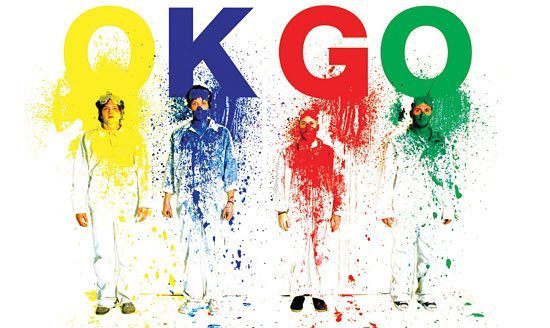
OK Go, This Too Shall Pass (3:54)
A band makes a music video ala Rube Goldberg. A TV smashes, people are shot with paint.
Doodling in Math Class: Infinity Elephants (4:36)
Makes you want to grab a pencil and start drawing fractals.
Artist of the Floating World (4:47)
An artist creates a giant pair of floating dice and sets them adrift in the ocean.
Brooklyn’s Rube Goldberg (5:34)
A real page turner.
Thursday, January 24, 2013
Lego Robotics

I had an incredible day with students. As part of the Flynn Elementary School Inquiry Fair, I teamed up with Amy Truchon and Nina Madore to offer a workshop on Lego Robotics. We’d borrowed 8 brand new kits from Professor Tim Whiteford of Saint Michael’s College, opened the boxes and played around with them just recently.
We used both Lego WEDO and Lego Mindstorms kits. I had only taken them out of the box and dabbled a teeny bit, so I was experimenting along with the students. Kids built alligators that chomp your finger if you move it close enough, kicking soccer players and goalies, tweeting birds, and more. My afternoon Mindstorms duo programmed a car to drive until it got close to a wall or other obstacle, stop, back up, change direction, make a fiendish laughing sound, then start driving again.
Students didn’t want to leave at the end of the workshop to go to lunch or home. They were having too much fun. I highly recommend these for school or home. In the end, what they are learning is software and hardware engineering, a very relevant set of skills in these times.
Tuesday, January 1, 2013
Radiolab Numbers

Radiolab is so cool. It’s a public radio show you can listen to on your public radio station or online. My dad recently told me about a Radiolab show called Numbers. It originally aired in November 2009. Each show is an hour long and has several segments on a single topic. If you listen to the Numbers show, you’ll first hear a Johnny Cash song, then learn about the innate number sense of infants, and move on to other fascinating topics like Benford’s Law, a surprising observation about the first digits of numbers, and a forensic accountant who uses it to investigate fraud, and on and on. The show is a very human take on numbers. I’m sure you’ll enjoy it.
Subscribe to:
Posts (Atom)